
The best Open311 consumer app

Intro
A month ago, I had no idea there was a thing called Open311 - an open protocol for reporting all types of civic issues. It gets its name from the phone-based 311 system that preceded it, which is instead of dialing 911, you dial 311, and you are connected to a non-emergency line to report civic issues. Open311 essentially brought that system online.
One Wednesday morning a month ago I drove downtown to get a coffee in the city I live nearby. As I was driving home, I hit a stop sign that had a sign saying you couldn't turn left, which made no sense to me, and I thought "who can I tell about this so they can remove this sign?". I went home and didn't do any research, fired up Fable, and asked it to build me an app which turned into Snag — a free, anonymous iOS app for reporting broken infrastructure.
The idea felt obvious: cities can't fix what they don't know about, and reporting problems should be as easy as noticing them.
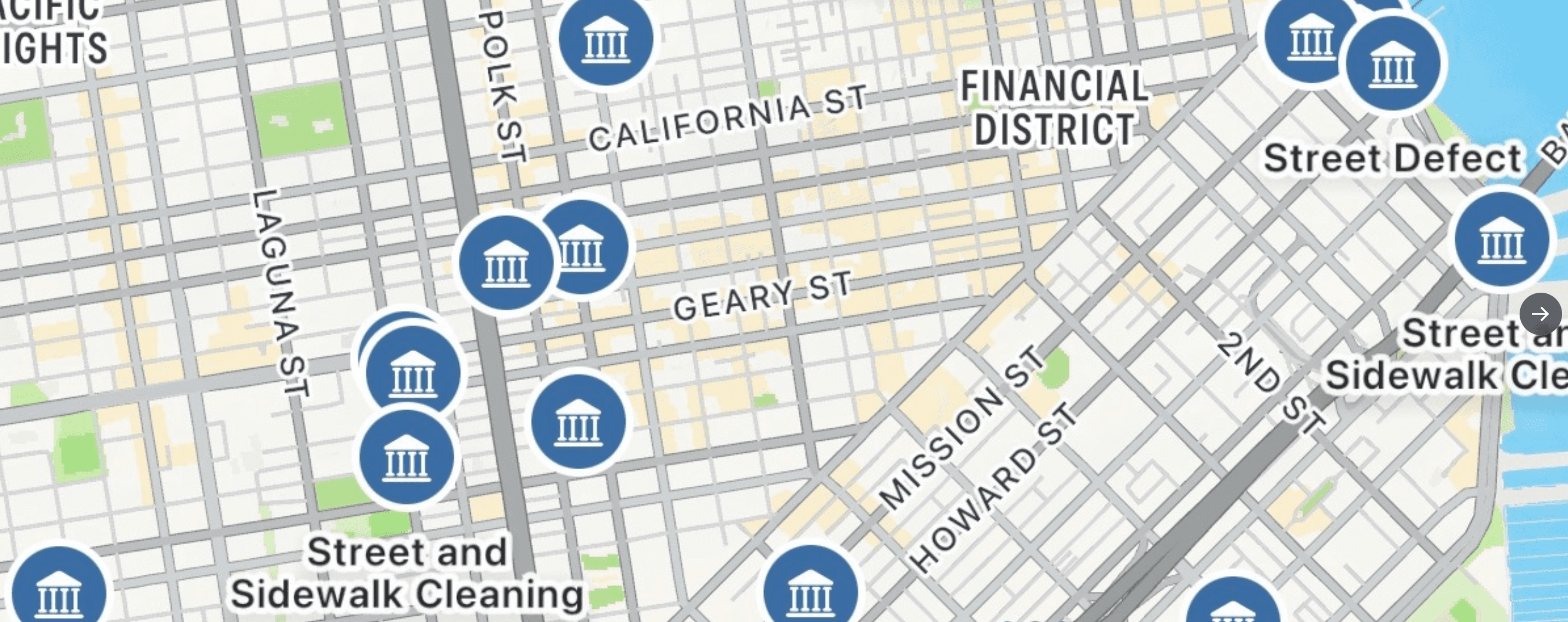
As I was building it, I learned about Open311. Somehow in the chat with Fable, it was brought up. I ended up pulling in some of the data from the protocol, so when a user loads up Snag they can see issues reported near them, regardless if they were reported in Snag or not.
Open311 History
The protocol was introduced in 2010. Any app could submit a pothole report to any participating city; any city could receive reports from any app. San Francisco and DC adopted it first, and an open-source ecosystem sprang up around it. From some quick research, it seems like growth stalled out about five years in. The thing is, the standard still works. It's stable and no one owns it. No one has built fresh consumer UX around it. There seems to be a couple reasons why.
The feedback loop is broken
A Harvard Business School study using Boston's 311 data found that when citizens can see that their reported problem got resolved, they become roughly 14% more trusting of government, 12% more supportive, and — crucially — they report more afterward. So if citizens are reporting issues in an app and not seeing cities act on them, they stop reporting. This seems to be a hard problem to solve.
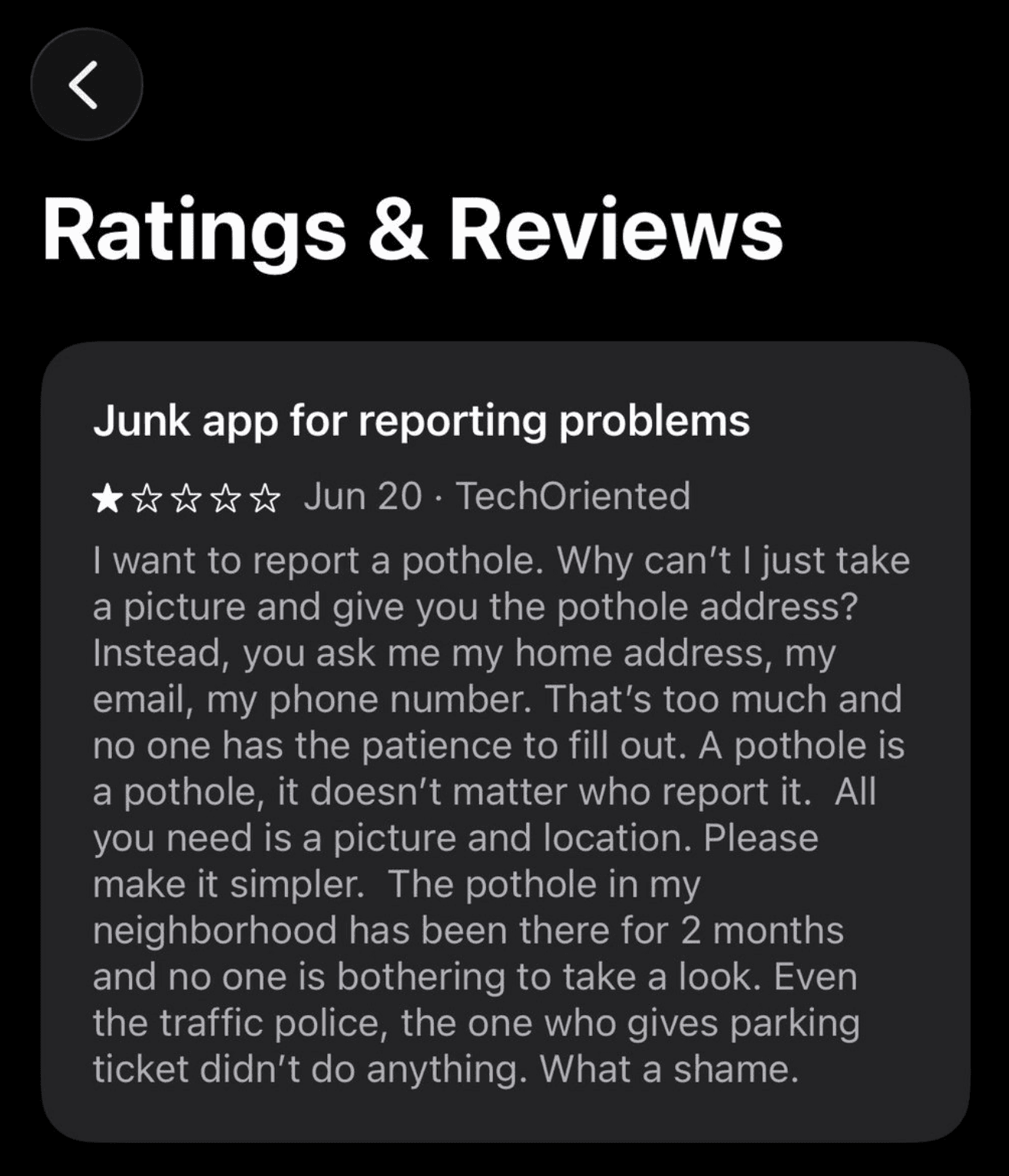
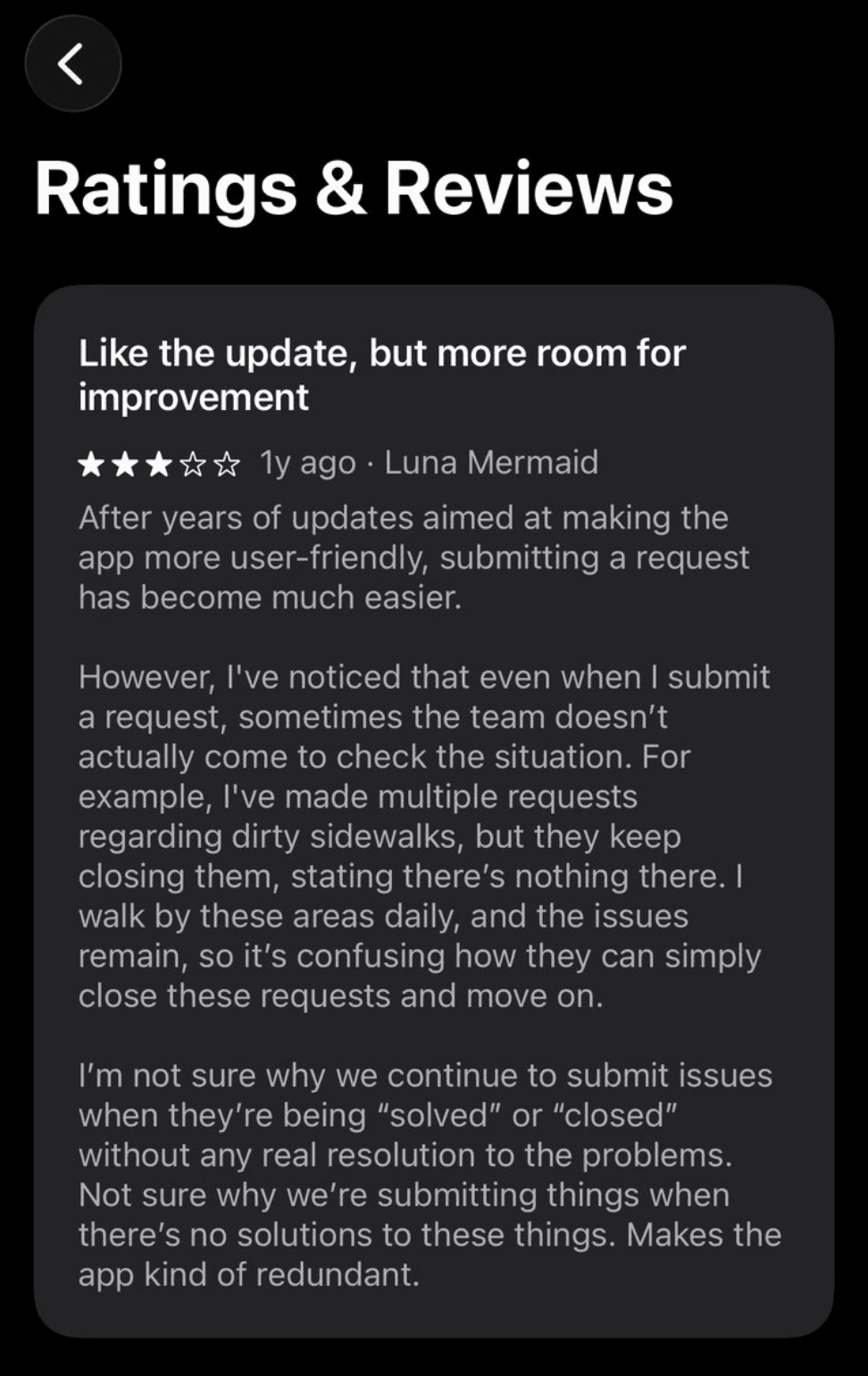
It also looks like cities fake the statuses in many cases. An about page on an Open311 monitor just straight up says that some city systems mark a report "closed" the moment an internal work order is created — whether or not anything visibly happened. NYC311's App Store reviews (3-star rated app) indicate this is an issue as well as the UX of the app being terrible. See a few below. (Snag solves the UX, but not the actual city action accountability).
The neighborhoods that need the most report the least
Across at least three cities, researchers have documented the same pattern:
- New York: A peer-reviewed study of heating complaints found about 14% of residential buildings were "under-reporting" — statistically predicted to have violations, but no complaint filed — concentrated in upper Manhattan, the Lower East Side, and Bushwick. Over-reporting concentrated on the Upper East and West Sides. Under-reporting neighborhoods had significantly more minority, unemployed, and limited-English residents.
- Houston: A 2024 study found the census tracts with the most potholes file the fewest 311 reports. A city that allocates road repair by report volume is steering crews away from the worst roads.
- Kansas City: Same pattern for street conditions — low-income and minority neighborhoods under-report despite greater need.
Statistically, 311 reporting behaves like a high-cost political activity — like showing up to a zoning meeting — not the low-friction channel it's supposed to be.
Every account you require, every form field you add, every "download your city's official app" hurdle is a cost. And costs filter out exactly the people whose streets are most broken.
Snag offers a much simpler UX, plus anonymity.
What other consumer reporting apps are there
SeeClickFix is the biggest dedicated player — but it's fundamentally B2G software: sold to cities as 311 CRM, with the citizen app as the front end. It's entrenched where cities have bought it, and the resident experience shows its age.
City-native 311 apps (NYC311, BOS:311, DC311) are the "official" channels in big cities, and they're where the failure modes above live — DC's official app went down entirely for six weeks this year.
FixMyStreet pioneered this whole model in the UK and remains excellent there, with minimal US presence.
PublicStuff was absorbed into enterprise software years ago.
Most of the issues today either go into a phone call, die in a neighborhood Facebook group where no city system will ever see it, or never get expressed at all. That's where the most users are, and the apps for reporting are where the most friction is.
Where Snag fits
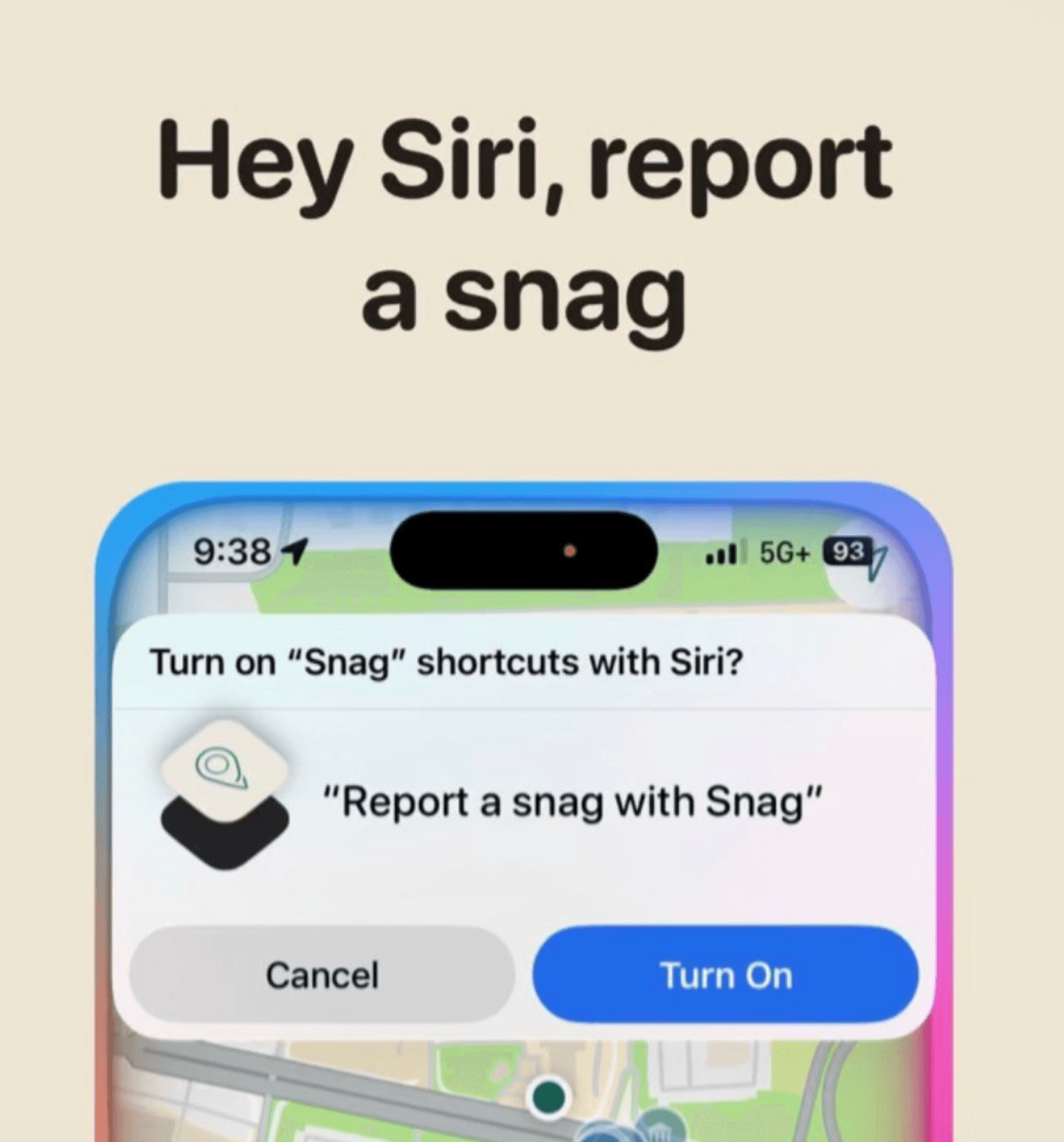
Snag (also the best and cleanest name of all the reporting apps) makes the app experience as simple as it can possibly be. No login, no account, complete anonymity, report in seconds, or just say "Hey Siri, report a snag" without opening the app. It works in any city from day one.
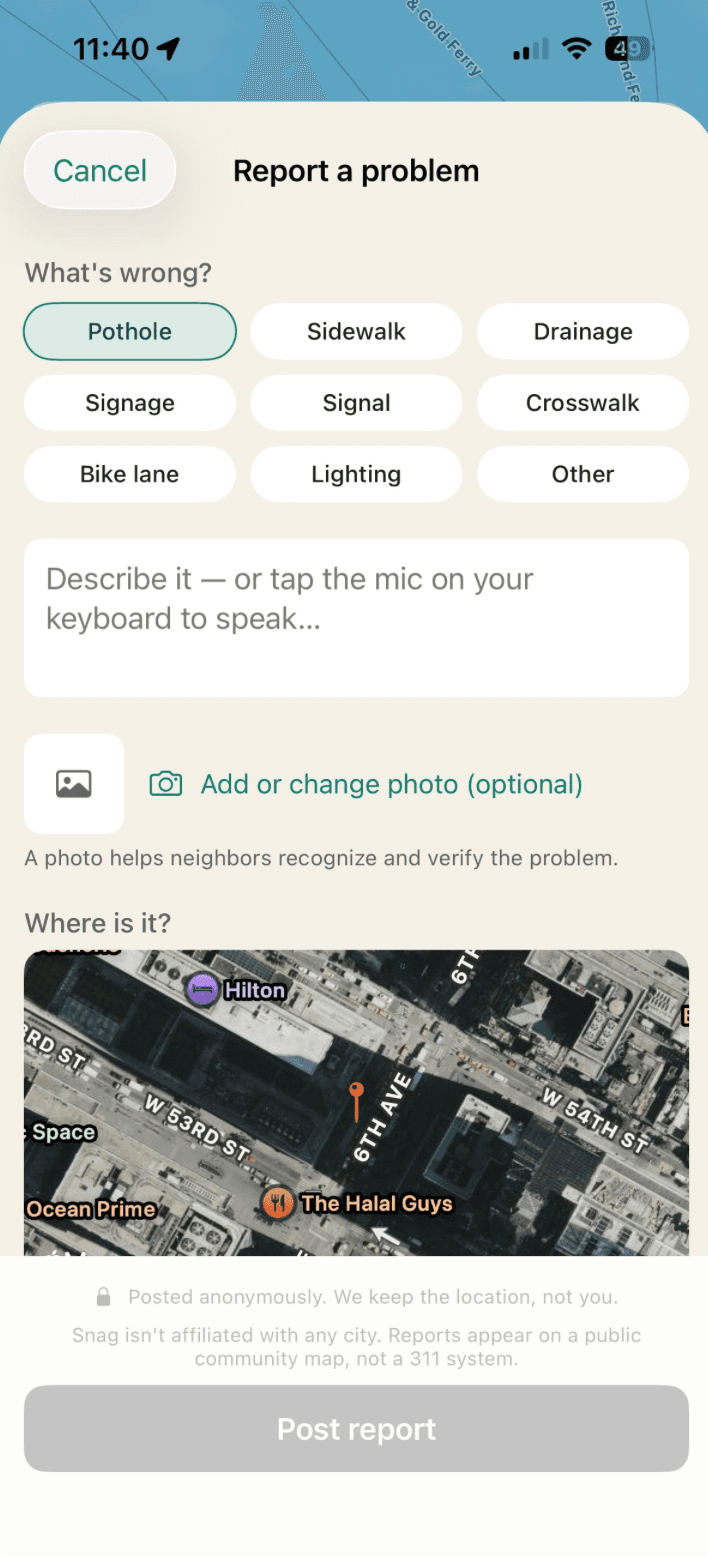
For cities, Snag speaks natively — the data exports in the format their systems already understand, plugging modern consumer UX into the protocol. Snag wouldn't solve issue resolution accountability, but it wouldn't promise that, at least for the issues reported within the app and not the other 311 consumer apps (those report a status which currently displays in Snag).
The realistic fit is the majority of reports that currently die in a Nextdoor thread or never get made: the mid-sized and small cities with no decent channel, and the residents everywhere for whom the existing channels cost too much effort.
Snag was built in one day by Fable. When I had the idea and went home and made it, I was testing with TestFlight when I was on my way to get lunch with a friend a few days later, reporting an actual issue in my city. Next up, I have to find contacts in my city I can meet with to see if we can get Snag as an official recommendation to citizens in my community, and get the city to subscribe to the 311 data Snag will produce. And we'll go from there.